
FROM THE ARCHIVES: The Self-Proclaimed “Metropolitan” and School Records That Speak for Themselves
As the old saying goes: a lack of knowledge is often paired with an excess of self-confidence. In the case of Bojan Bojović, this proverb takes on a very concrete and well-documented meaning.
A person who was not deterred by a serious lack of formal education from seeing himself as the head of the Montenegrin Orthodox Church also showed no shortage of audacity in declaring others unworthy, disqualifying them, sidelining them, or “retiring” them. We are speaking of a man who needed a full five years to complete the first grade of a vocational secondary school, a fact clearly confirmed by the school certificates we are now presenting to the public.
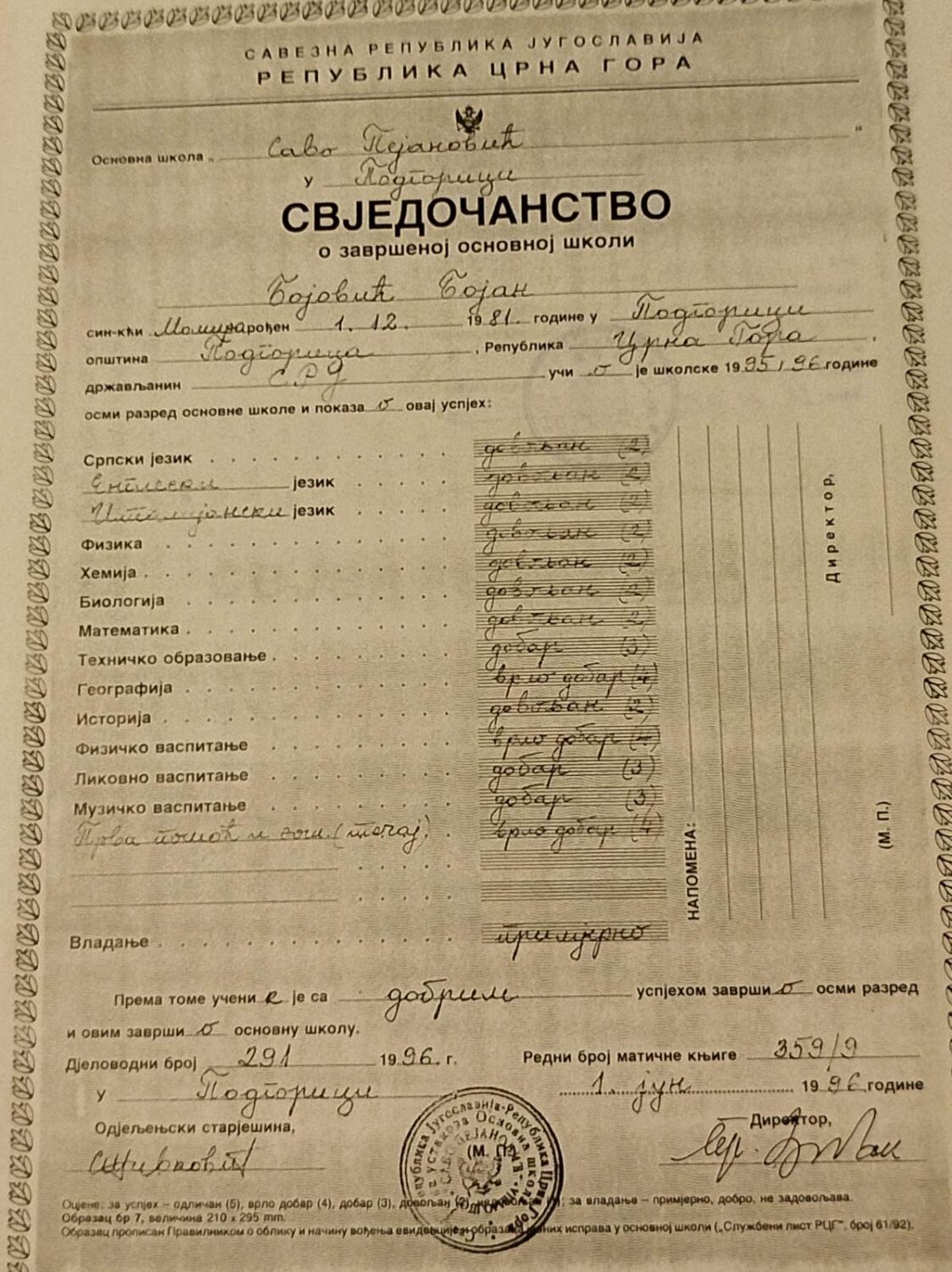
As can be seen from the available documentation, he completed primary school in the 1995/96 school year with an average of 2.5. He began the first grade of vocational secondary school much earlier, but after several years of repetition managed to complete it only in 2001, at the age of twenty.
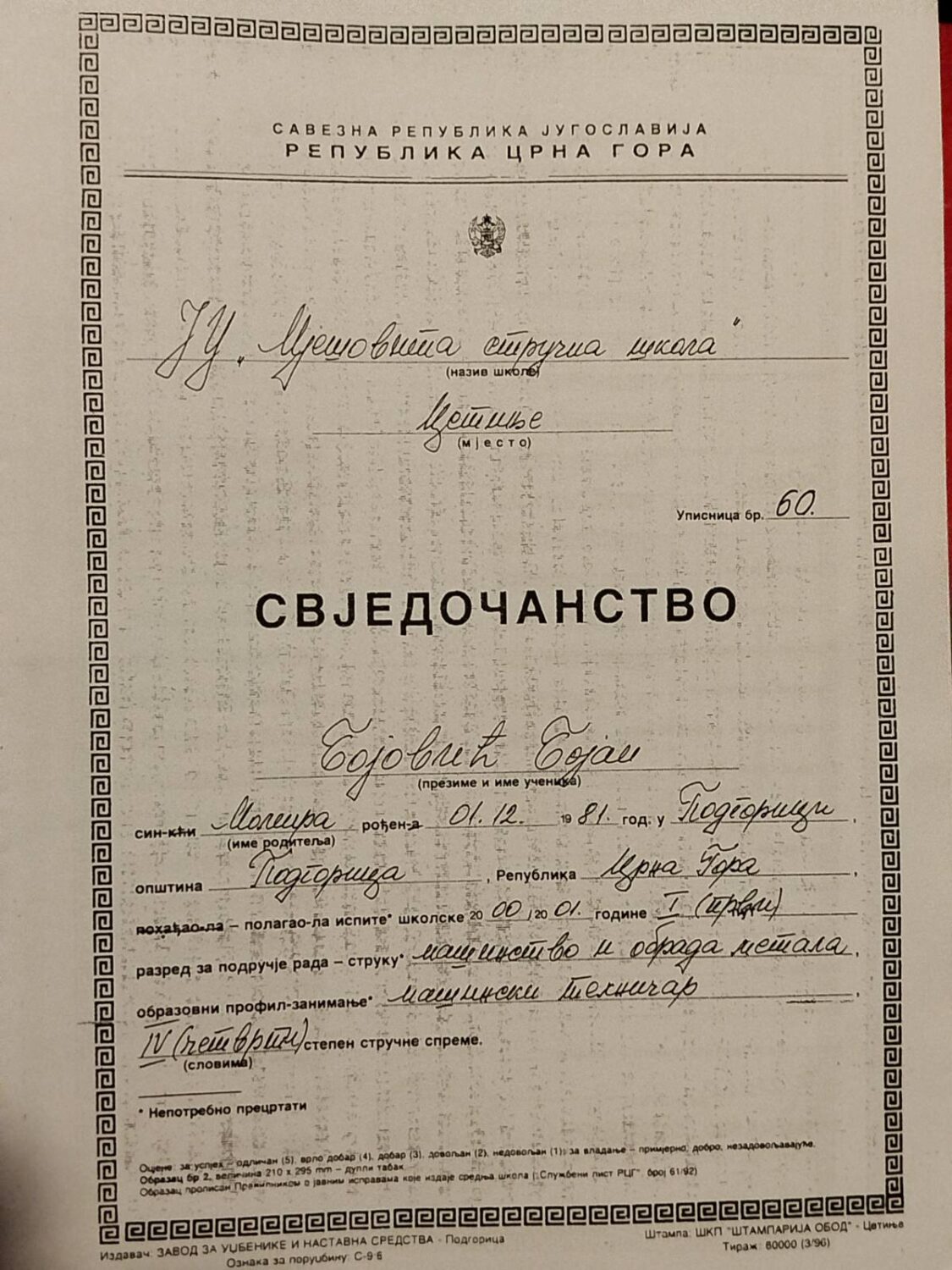
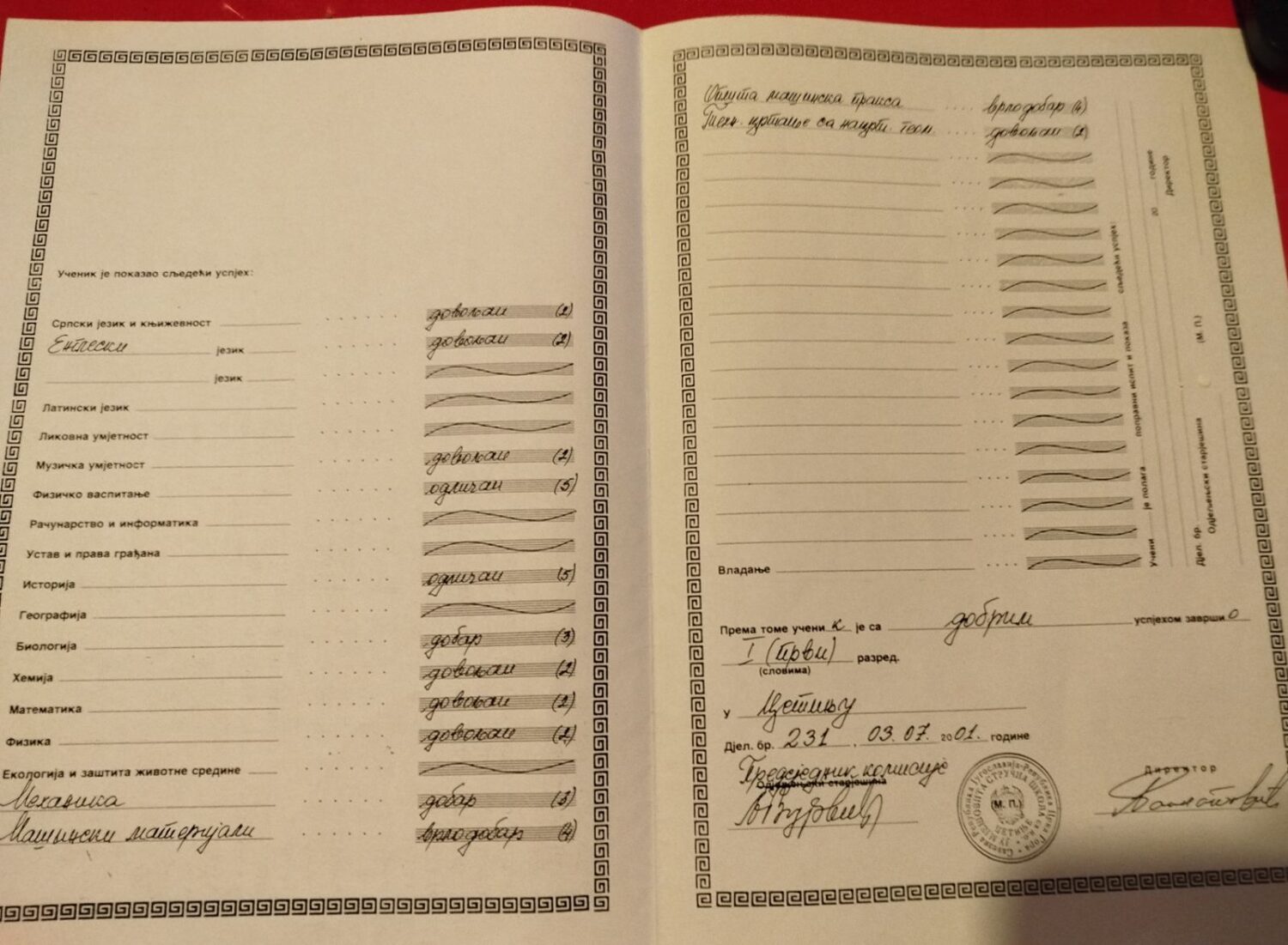
Here we arrive at the paradox that best illustrates the nature of his “rise.” After needing five years to master the material of a single grade, Bojović completed two additional grades of vocational secondary school—mechanical engineering track—in a period of less than one year, with sufficient or good results.
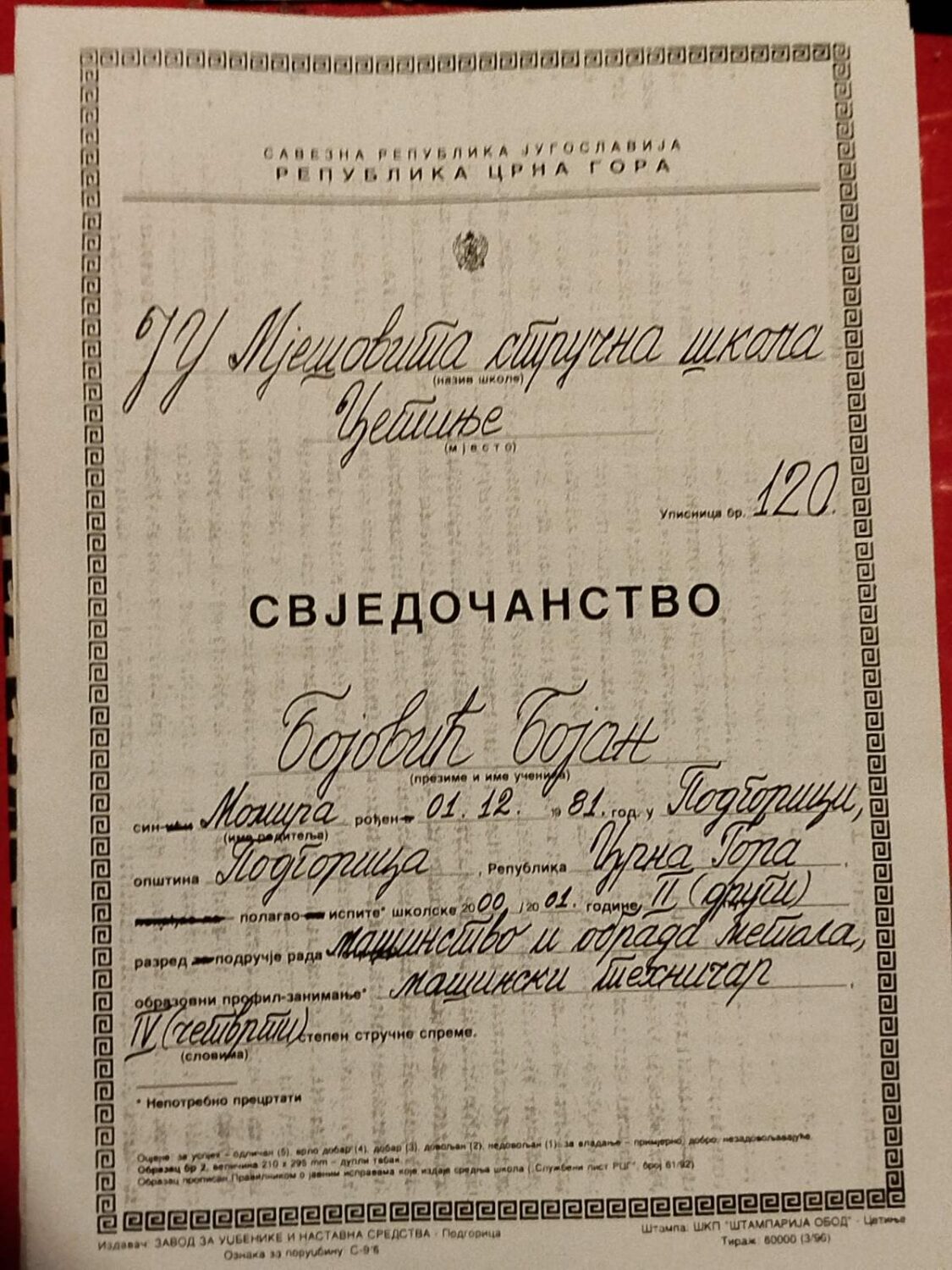
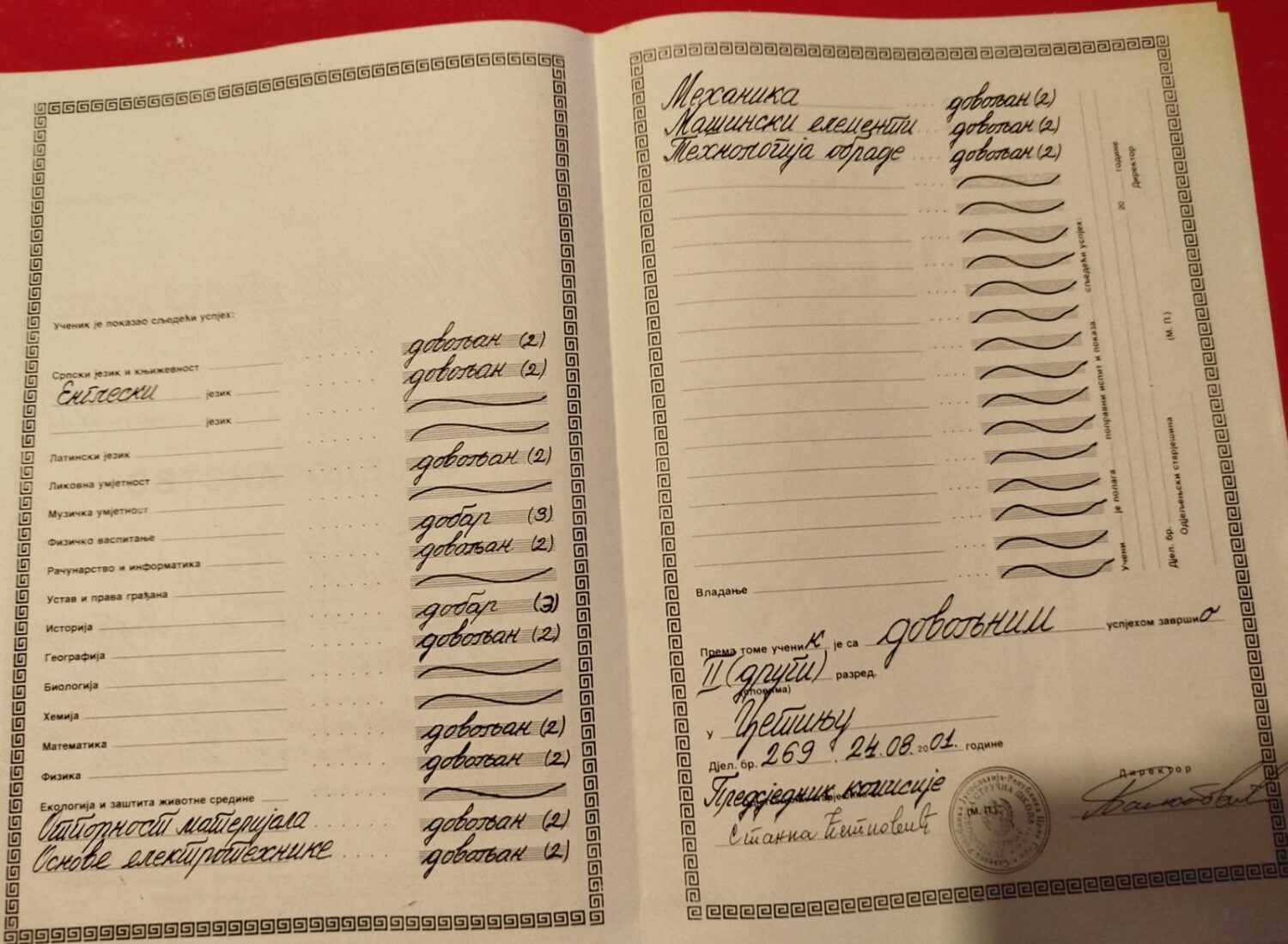
Such an “educational sprint” would not have been possible without special circumstances, which the public has the right to know about.
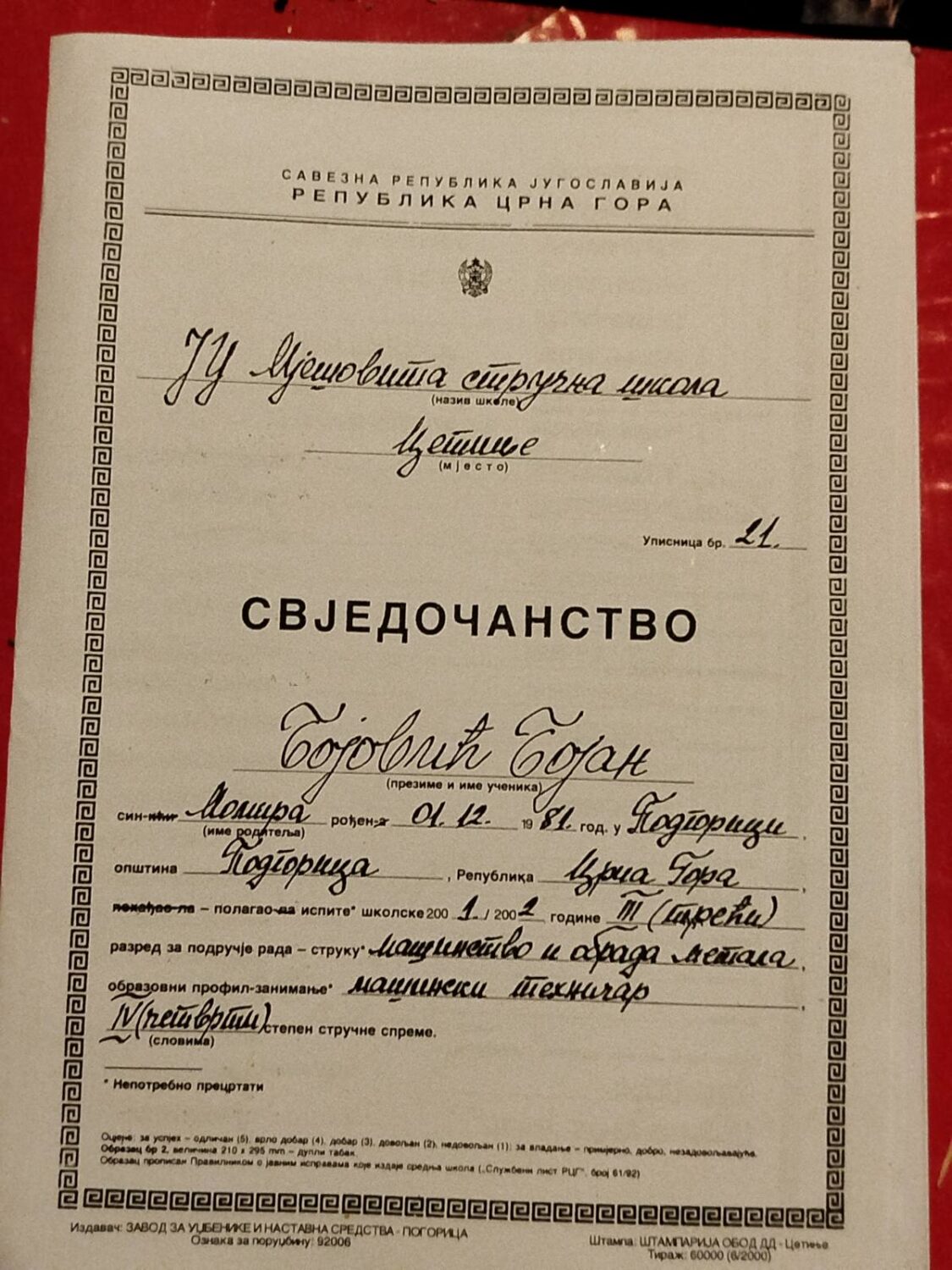
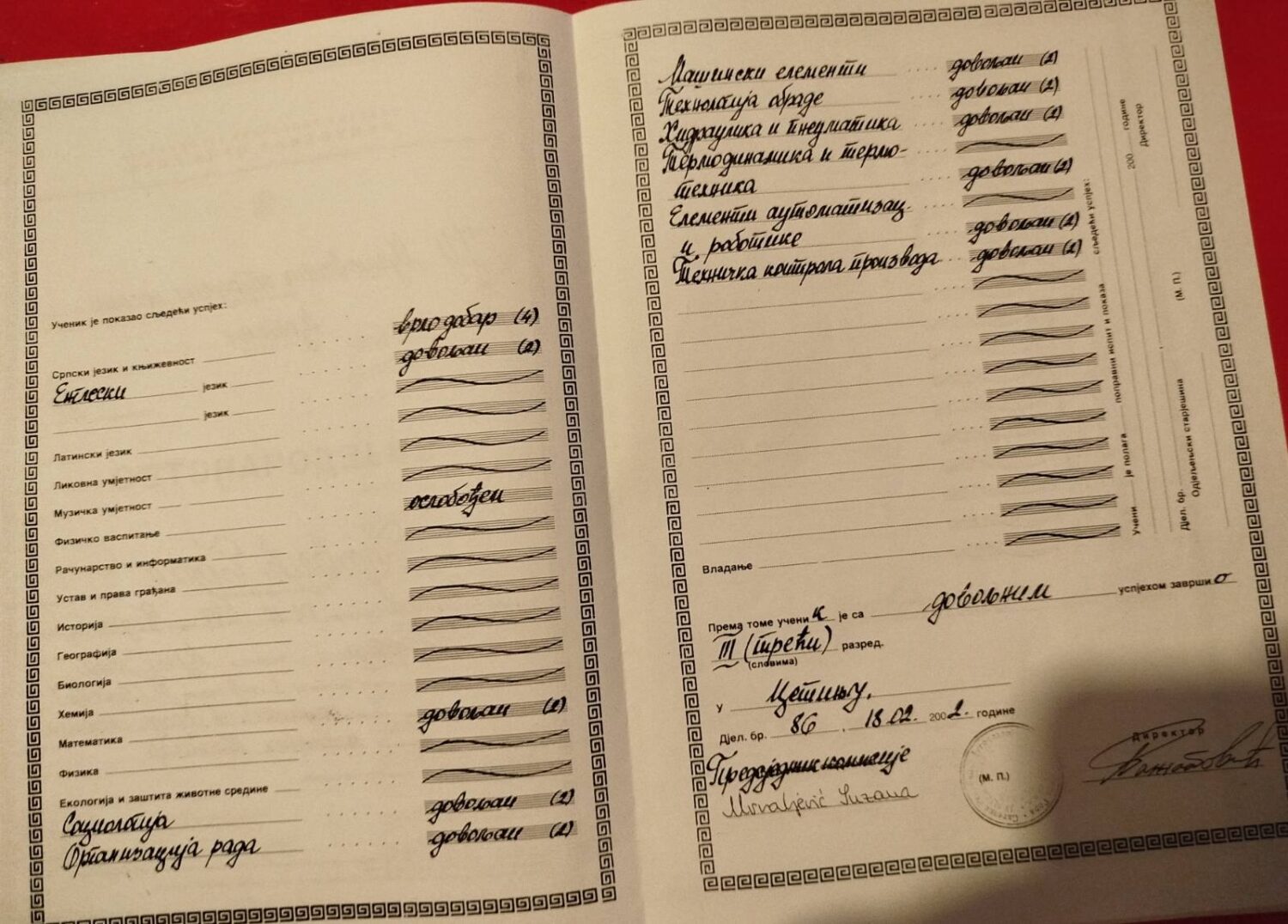
When we say that he “completed” three grades in a short period—about half a year—we primarily refer to the fact that people from the Montenegrin Orthodox Church, guided by paternal concern and hope, placed their trust in him, using their personal reputation and contacts so that he might at least formally acquire a secondary education and thus meet the minimum requirements for diaconal service. Two of those individuals were also his teachers at the school.
According to his own claims, Bojović also possesses a diploma for the completion of the fourth grade of secondary school. Should such a diploma be located and made available, it too will be presented to the public without hesitation—along with all other documents related to his biography.
Thus, nearly an entire decade passed between the completion of primary school and the end of secondary education. Instead of gratitude and a sense of responsibility, something entirely different followed. Once he seized the opportunity, from the position to which he had been elevated, this same individual began removing precisely those who had brought him to an honourable clerical rank in the Montenegrin Orthodox Church, dismissing them in his ignorance as “uncomfortable witnesses” to his dizzying and unnatural rise, while mocking their education and the professions they had pursued throughout their careers.
Anyone even slightly familiar with the profile of such individuals knows that this kind of attitude toward knowledge and the work of others logically breeds contempt for those who have spent years studying, earned university degrees, held public or private positions, and built real life careers. For someone who has never walked the genuine path of self-discipline and sacrifice cannot understand its value, nor respect it.
The certificates we publish today do not insult, interpret, or speculate. They simply state what is written in the archives of the very Church he is now dismantling. And archives, unlike self-proclaimed titles, possess one inconvenient trait—they remember.
There will be time for the public to become acquainted with other facts, when it is ready. We knew him when he was nobody, and when he aspired to be everything. That is why we know how dangerous the gap between reality and self-proclamation can sometimes be.
To be continued…
Office for Public Relations